

Employee Evaluation Feature
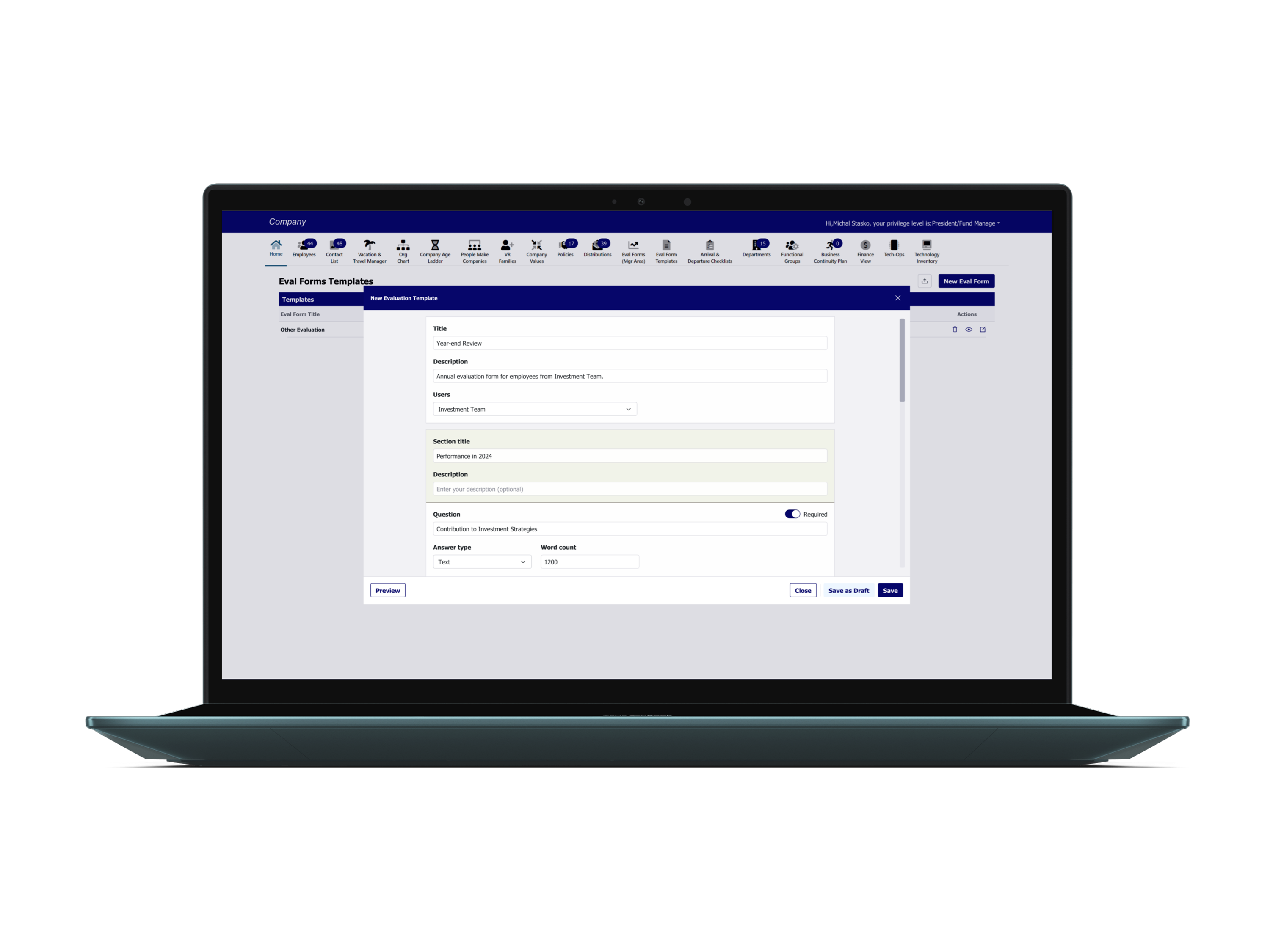
A new feature designed for an existing internal platform to support and streamline the annual employee evaluation process. The goal was to create a clear and consistent experience that works equally well for employees completing evaluations and managers responsible for reviewing and approving them.
Problem
The existing evaluation process relied heavily on manually created documents and external tools. As a result, employees often submitted incomplete or incorrectly filled evaluations, while managers struggled with inconsistent formats, limited visibility into progress, and time-consuming review cycles. This led to frustration, delays, and a lack of standardisation across the organisation.
My role and responsibilities
I worked as the sole UX/UI Designer for this feature. My responsibilities included conducting research, facilitating workshops, defining user flows, designing wireframes and high-fidelity interfaces, creating interactive prototypes, and preparing design documentation for the development team.
Process
The project started with a client alignment meeting focused on defining business goals, success criteria, and key requirements for the feature.
To better understand real user needs, I facilitated workshops with employees and managers who were directly involved in the evaluation process. These sessions helped uncover pain points related to form creation, feedback clarity, and approval workflows, as well as variations in how different managers approached evaluations.
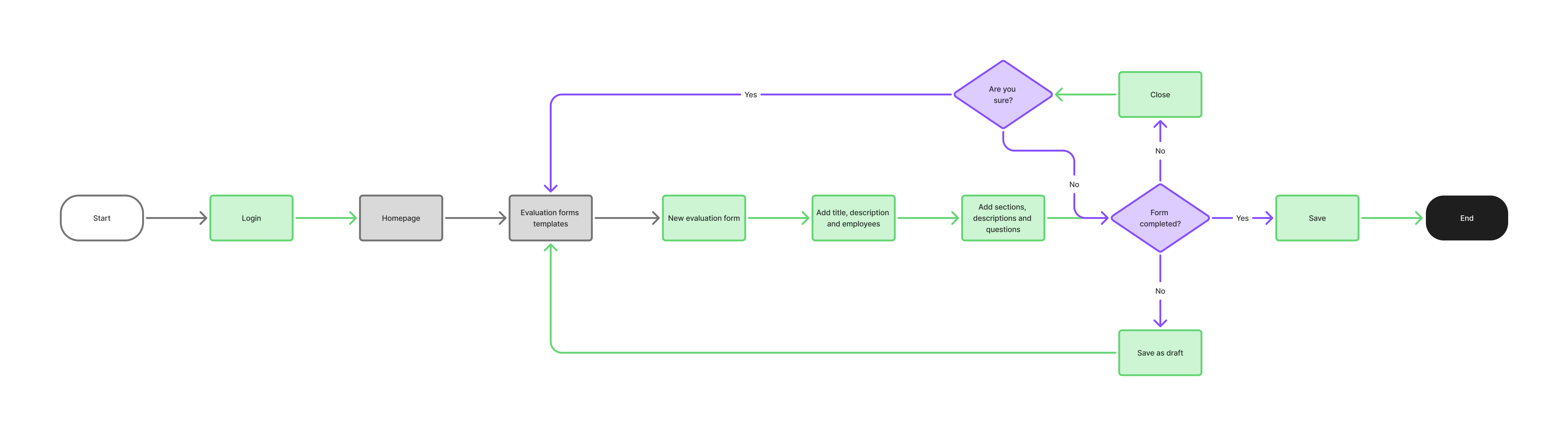
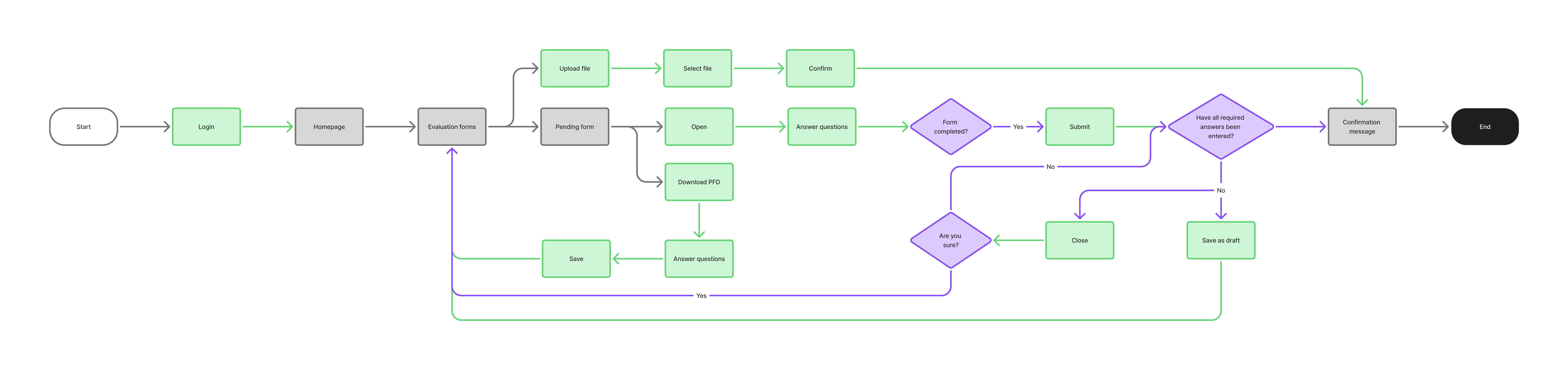
Based on the insights gathered, I designed detailed user flows that mapped the full evaluation lifecycle, from form creation to completion and approval. These flows served as the foundation for initial mockups and a simple interactive prototype.
Prototype-based user testing was then conducted to validate the structure, terminology, and overall usability of the solution. Feedback from these sessions revealed additional friction points, which led to further refinements before final approval.
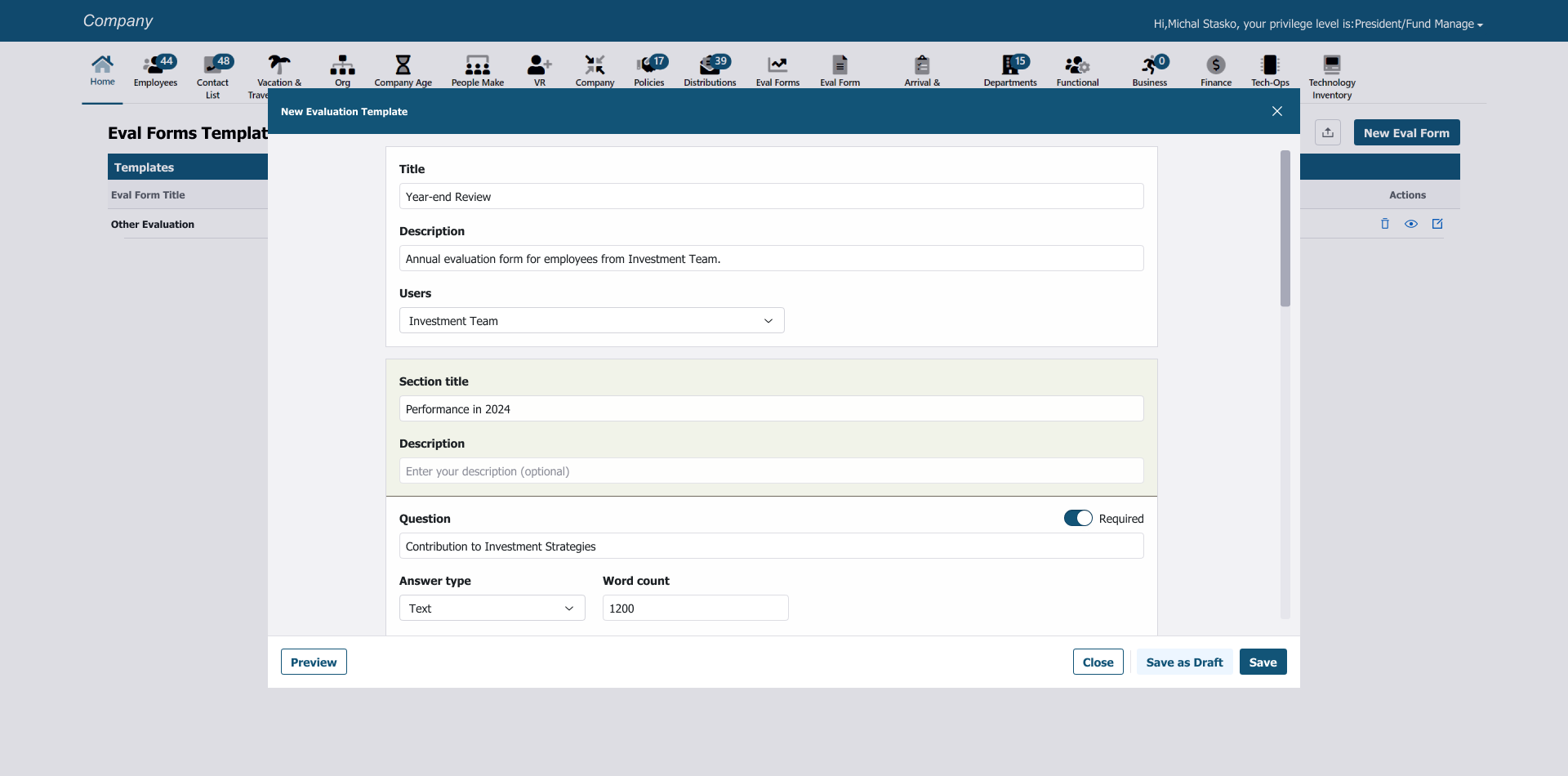
Once the design was validated, I delivered final high-fidelity mockups along with comprehensive documentation and led the design handoff to the development team responsible for implementing this phase of the platform.
Solution
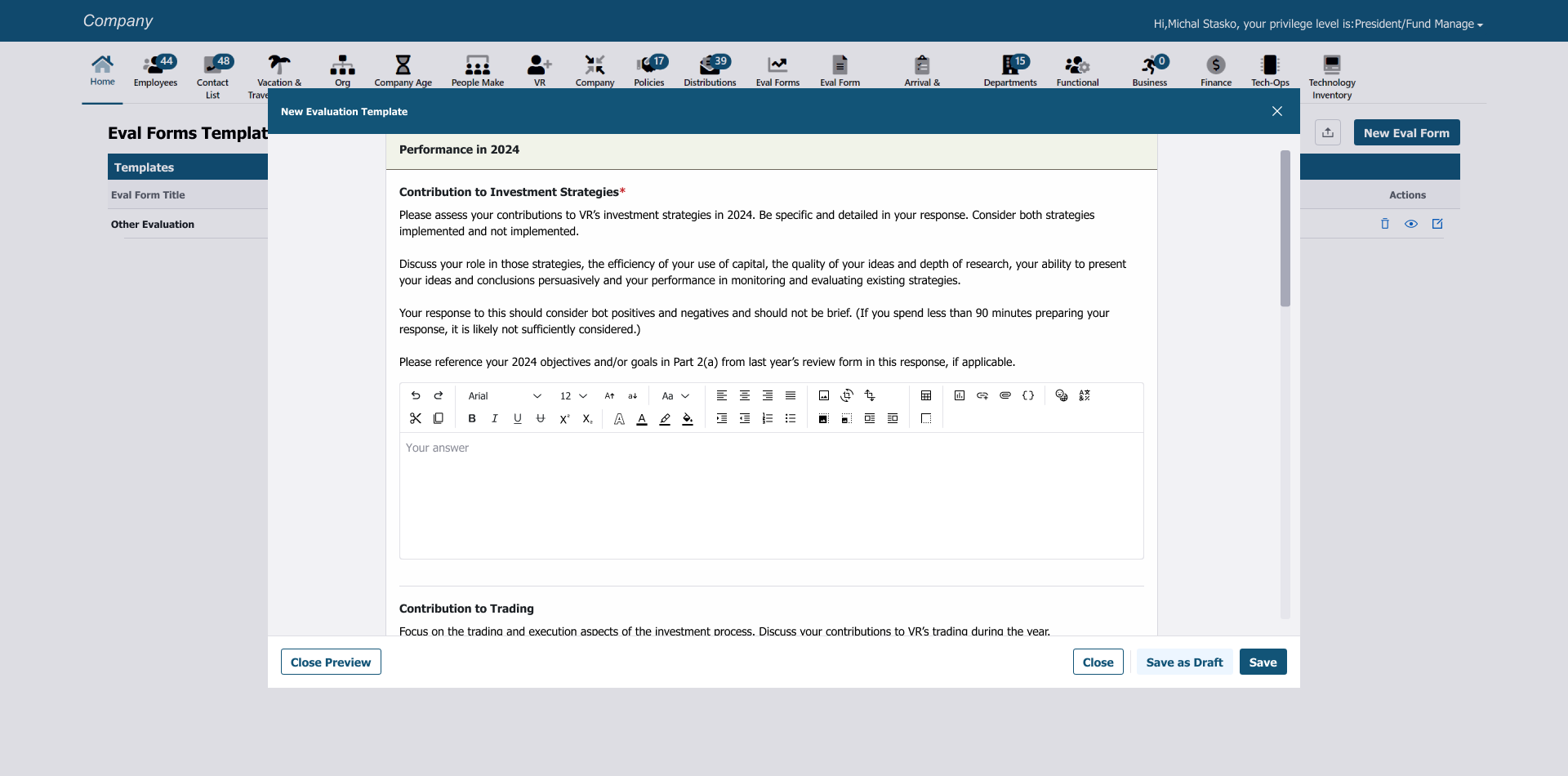
The final solution streamlined the entire evaluation process into a single, cohesive flow. Managers can now create structured, interactive evaluation forms directly within the platform, eliminating the need for external documents and manual uploads. Employees are guided through a clear and intuitive completion process, while managers can review submissions and provide feedback more efficiently within the same system.
Outcome
After the design handoff, I was assigned to another project and did not participate in testing the final implementation. However, feedback collected during prototype testing and stakeholder reviews indicated that the feature significantly reduced friction in the evaluation process, improving consistency, clarity, and overall efficiency for both employees and managers.
Lessons learned and challenges
One of the main challenges was the lack of a single, standardised evaluation approach, as managers previously used their own methods and formats. This project highlighted the importance of balancing flexibility with consistency and reinforced the value of early alignment when designing workflows that affect multiple roles across an organisation.
